
LED Video Walls & Screens for Midwest Schools, Colleges and Universities
Chicago, Detroit, Columbus, Indianapolis, and the rest of the Midwest run one of the widest seasonal temperature swings in the country — and one of the country’s deepest Big Ten and MAC athletics footprints driving stadium and arena display demand.
What Midwest weather actually asks of an LED display
Few regions ask more of an outdoor display’s operating range than the Midwest: sub-zero, snow-heavy winters give way to hot, humid summers, often with real wind loading across the open plains states. An outdoor board in Minneapolis, Omaha, or Chicago needs to run reliably from a January night game straight through an August one, without condensation, cracking, or a brightness drop-off in either direction.
Wide operating-temperature range
Midwest specs need panels rated across a genuinely wide range — well below freezing to summer heat — not a single-season rating.
Snow-load structural mounts
Heavy Midwest snowfall means mounting structures are engineered for accumulated load, not just wind.
Anti-condensation sealing
Sealed, heated enclosures keep the panel face clear when a display cycles between a cold morning and a heated gym or arena.
How Midwest capital projects get funded
Ohio districts work through the Ohio Facilities Construction Commission’s state-local cost-share formula, which rewards well-documented, right-sized requests over padded ones. Michigan districts commonly fund technology and facilities upgrades through voter-approved sinking fund millages, renewed on a multi-year cycle. Illinois, Indiana, Wisconsin, Minnesota, Missouri, and Nebraska districts more typically run local bond referenda tied to property tax levies, with election dates most often falling in the region’s spring or November cycles. Big Ten, MAC, and Missouri Valley athletics programs across the region also keep university-level stadium and arena board upgrades a steady, recurring capital conversation.
Confirm state cost-share vs local levy
OFCC formula, sinking fund millage, or a straightforward bond referendum.
Spec for the actual seasonal range
Not a fair-weather average — the real winter-to-summer swing.
Deliver a levy or bond-ready packet
Formatted for the vote your district is actually running.
Every Midwest metro, one partner
Chicago, Detroit, Columbus, Indianapolis, Cleveland, Milwaukee, Minneapolis, Kansas City, St. Louis, and Omaha anchor the region’s Tier-1 coverage, with Cincinnati, Wichita, Lincoln, Fort Wayne, Toledo, St. Paul, Des Moines, Grand Rapids, and Akron served as well. Tier-1 metros get a dedicated K-12 page and a dedicated Colleges & Universities page — the buyer, budget cycle, and decision-maker genuinely differ. Every other metro we serve gets one combined page. Looking for a different part of the country? See all U.S. regions →
Chicago, IL
K-12 districts and higher-ed campuses get separate, purpose-built pages.
Detroit, MI
K-12 districts and higher-ed campuses get separate, purpose-built pages.
Columbus, OH
K-12 districts and higher-ed campuses get separate, purpose-built pages.
Indianapolis, IN
K-12 districts and higher-ed campuses get separate, purpose-built pages.
Cleveland, OH
K-12 districts and higher-ed campuses get separate, purpose-built pages.
Milwaukee, WI
K-12 districts and higher-ed campuses get separate, purpose-built pages.
Minneapolis, MN
K-12 districts and higher-ed campuses get separate, purpose-built pages.
Kansas City, MO
K-12 districts and higher-ed campuses get separate, purpose-built pages.
St. Louis, MO
K-12 districts and higher-ed campuses get separate, purpose-built pages.
Omaha, NE
K-12 districts and higher-ed campuses get separate, purpose-built pages.
Cincinnati, OH
K-12 and higher-ed covered on one combined metro page.
Wichita, KS
K-12 and higher-ed covered on one combined metro page.
Lincoln, NE
K-12 and higher-ed covered on one combined metro page.
Fort Wayne, IN
K-12 and higher-ed covered on one combined metro page.
Toledo, OH
K-12 and higher-ed covered on one combined metro page.
St. Paul, MN
K-12 and higher-ed covered on one combined metro page.
Des Moines, IA
K-12 and higher-ed covered on one combined metro page.
Grand Rapids, MI
K-12 and higher-ed covered on one combined metro page.
Akron, OH
K-12 and higher-ed covered on one combined metro page.
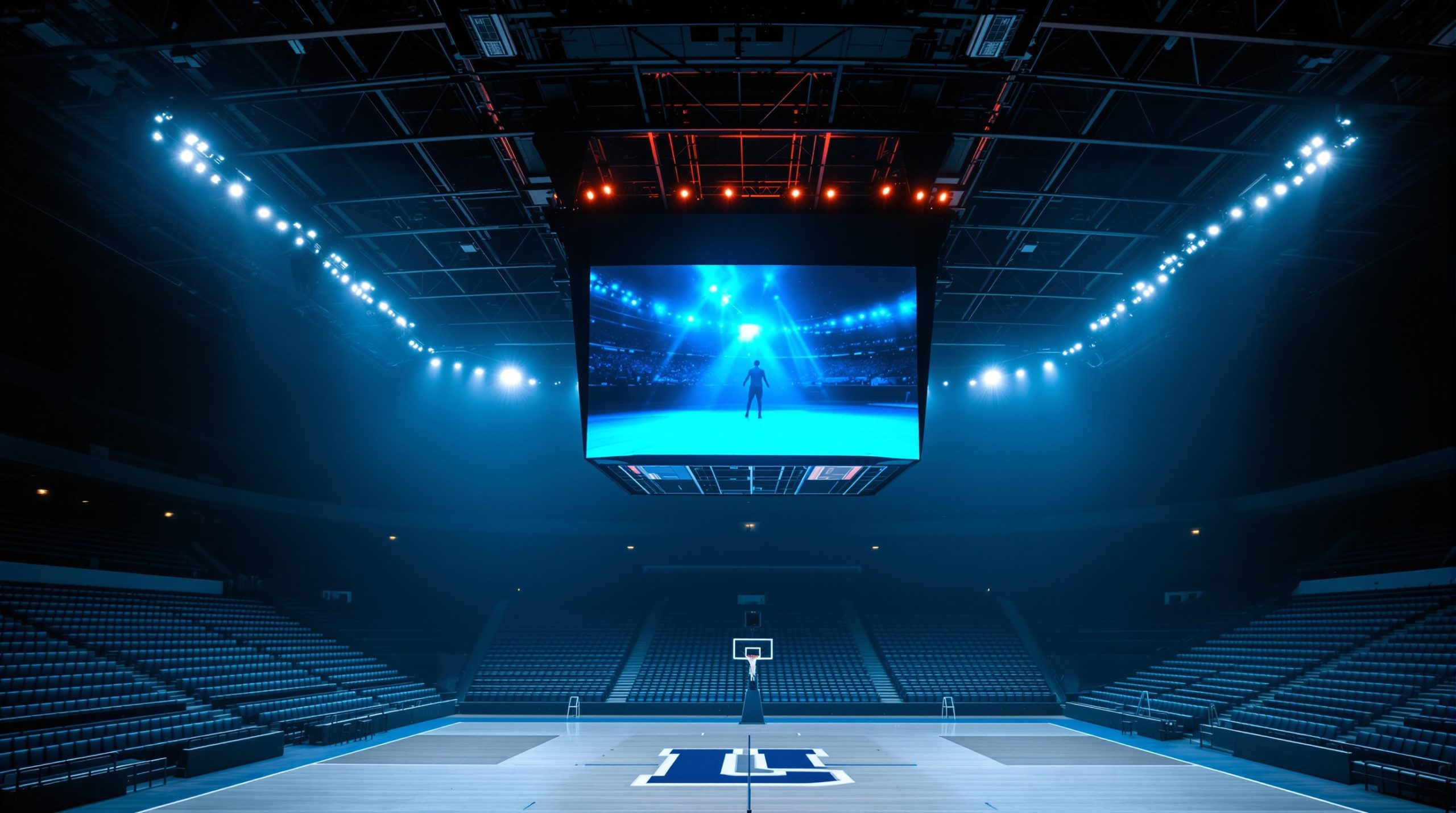
Arena boards and outdoor scoreboards built for a real Midwest winter
Midwest campuses run some of the country’s best-attended collegiate athletic programs in facilities that were built for multi-year capital planning cycles and genuinely cold winters. An outdoor stadium board in Chicago or Columbus has to survive—and perform—in conditions that include sub-zero overnight lows, heavy snow load on the structure, and condensation cycling inside the cabinet housing. Indoor arena boards carry their own constraint: consistent brightness under harsh arena flood lighting from any seat in a 15,000-capacity building.
Stadiums and arenas built for a real Midwest season
Big Ten and MAC-caliber athletics demand run through this region — the Dream tier covers stadium boards while the Imagine tier covers gyms and arenas.
Common questions about funding LED displays in the Midwest
How does Ohio fund school facilities and LED display projects?
Ohio districts work through the Ohio Facilities Construction Commission's state-local cost-share formula, which rewards well-documented, right-sized requests over padded ones.
How do Michigan districts fund technology and facilities upgrades?
Michigan districts commonly fund technology and facilities upgrades through voter-approved sinking fund millages, renewed on a multi-year cycle.
How do most other Midwest states fund LED display projects?
Illinois, Indiana, Wisconsin, Minnesota, Missouri, and Nebraska districts more typically run local bond referenda tied to property tax levies, with election dates most often falling in the region's spring or November cycles.
Is stadium and arena video board demand steady at the college level in the Midwest?
Yes. Big Ten, MAC, and Missouri Valley athletics programs across the Midwest keep university-level stadium and arena board upgrades a steady, recurring capital conversation.
Why schools choose us over a sign shop or an import box
The same screen from three different sources is not the same purchase. Here is what changes when a specialist scopes it for education.
| What matters to your board | LED Screens for Schools | Local sign company | Cheap online / import LED |
|---|---|---|---|
| Education-grade warranty | 3-year manufacturer warranty, plus support for as long as you own the panels | Often 1 year on parts, labor extra | 30 to 90 day limited, overseas RMA |
| Turnkey install, nationwide | Spec, source, install and support through Visualize LED (offices in CA, PA, FL, TX; installs nationwide) | Local footprint only, larger jobs subbed out | Ships a box, install is your problem |
| Purchasing & funding fit | Board-ready written proposals structured for PO, RFP and bond-funded capital budgets | Basic quote, rarely RFP-ready | Card checkout, no PO or RFP paperwork |
| Weatherproof / outdoor spec | GOB and outdoor-rated panels up to 5,500 nits, spec'd to your climate and viewing distance | Reader-board grade, limited true video spec | Indoor panels sold as outdoor, wash out in daylight |
| Remote content management | Networked control for schedules, scores, announcements and emergency alerts | Sometimes, platform varies by vendor | DIY software, no onboarding or support |
| Dedicated support | A named point of contact, not a ticket queue | Owner-dependent, slow at district scale | Email-only overseas support with time-zone lag |
Real proof, not marketing claims
Every display we spec is fulfilled by Visualize LED, an American-made LED manufacturer serving schools, colleges and churches since 2010 — with the reviews, warranty and panel life to back it.
Ready to spec a display for a Midwest campus?
Tell us about the district, the venue, and the timeline — we’ll bring back a right-sized recommendation built for how your board actually approves capital projects.
Request a Spec & Quote